Best cameras for video
UPDATED OCTOBER 2026For video we weigh 4K frame rates, 10-bit colour and log for grading, whether 4K 60p crops in, rolling shutter, and whether the camera can keep recording without overheating.
How we ranked them: 4K frame rates, 10-bit colour and log, no crop at 4K 60p, fast readout, cooling, from manufacturer specs and lab measurements, plus our overall score. How CameraFits makes money
Who this is for
This guide is for people who shoot video first and stills second: wedding and event filmmakers, YouTubers moving up from an entry-level body, documentary shooters, and small crews who need a hybrid camera that can work as an A or B camera. Every body here records 10-bit video internally.
What matters most
Frame rates decide how much slow motion is available. 4K 60p plays back at 40% speed on a 24p timeline, and 4K 120p at 20%. Every camera here records 4K 120p.
10-bit color and a log profile give footage room to be graded. 8-bit files tend to band in skies and break up when color is pushed hard. Every camera here records 10-bit 4:2:2 with a log profile.
A crop at 4K 60p changes lens choice, because a wide lens stops being wide. None of these cameras crop at 4K 60p.
Readout speed controls rolling shutter, the skew that shows up in fast pans and on passing cars. A lower measured readout means less wobble.
Cooling matters for long, unbroken takes such as ceremonies, interviews and stage events. A built-in fan helps a camera keep recording in warm conditions.
How these picks differ
Three are Panasonic. The full-frame Lumix S1 II and the Micro Four Thirds GH7 both have fans and record ProRes RAW internally. The G9 II shares many GH7 video modes in a stills-oriented body without a fan. The Nikon Z6 III and Canon EOS R6 III are full-frame hybrids that record raw internally above 4K, with the Z6 III offering a shorter measured readout than the R6 III. The Fujifilm X-H2S is APS-C with a stacked sensor and a readout close to the Z6 III. The Sony A7 V and A7R VI lean toward stills, at 33MP and 66.8MP, and the A7R VI adds 8K.
Buying advice
Budget for fast cards first. The S1 II, GH7, Z6 III, R6 III and X-H2S take CFexpress Type B, and the Sonys take CFexpress Type A. Add a good on-camera or wireless microphone, a variable ND filter for shooting at proper shutter speeds outdoors, and at least two spare batteries. A stabilized standard zoom covers most paid work. Skip 8K and paid log upgrades unless a client or another camera on set needs them. Internal raw is useful for heavy grading, but it fills cards quickly, so check storage and editing hardware before relying on it.
The 8 picks
- 1
 BEST OVERALLBest for: Full-frame video shooters who need long takes and internal raw
The Lumix S1 II is built around video. Its partially stacked 24.1MP full-frame sensor has a measured readout of 12.7 ms at 5.8K, so pans show little skew. It records 6K 30p and 4K 120p, with no crop at 4K 60p, in 10-bit 4:2:2 V-Log. Open gate is supported, ProRes RAW records internally, and Blackmagic RAW goes out over a full-size HDMI port. A built-in fan supports long takes, and CFexpress Type B plus SD slots handle high-bitrate files. Eight stops of in-body stabilization help with handheld shots.
At 800 g it is on the heavy side, and battery life is rated at 360 shots. ARRI LogC3 for matching cinema cameras requires a paid key. The 24MP sensor is modest for stills; the Sony A7 V offers 33MP and a longer battery rating. Anyone who wants the same Panasonic video tools with smaller, lighter lenses should look at the Lumix GH7.
- 24.1MP full-frame sensor
- 70 fps burst
- 6K video, 4K 120p
- 8-stop stabilization
- 2
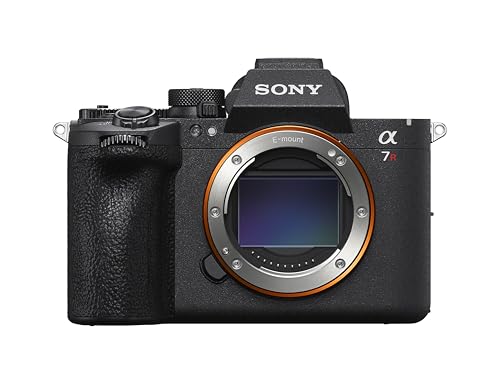 Sony A7R VI9.8Best for: Hybrid shooters who need 66.8MP stills and 8K video
The A7R VI suits people who need high-resolution stills and serious video from one body. Its 66.8MP stacked sensor records 8K 30p with a measured readout of 13.5 ms at full width, and it shoots 4K 120p with no crop at 4K 60p. Footage is 10-bit 4:2:2 S-Log3, and raw video is available over a full-size HDMI port. Two CFexpress Type A/SD UHS-II slots, a battery rated at 710 shots, and 8.5 stops of in-body stabilization suit long shoot days. Its 9.44M-dot viewfinder has a higher resolution than the 5.76M-dot finder on the Z6 III.
Raw video is external only, there is no open gate, and 8K files are large to store and edit. A body built for 66.8MP stills is more camera than most video work needs. Video-first shooters get internal raw from the Lumix S1 II or Nikon Z6 III. The Sony A7 V covers 4K 120p and S-Log3 in the same E-mount with a 33MP sensor.
- 66.8MP full-frame sensor
- 30 fps burst
- 8K video, 4K 120p
- 8.5-stop stabilization
- 3
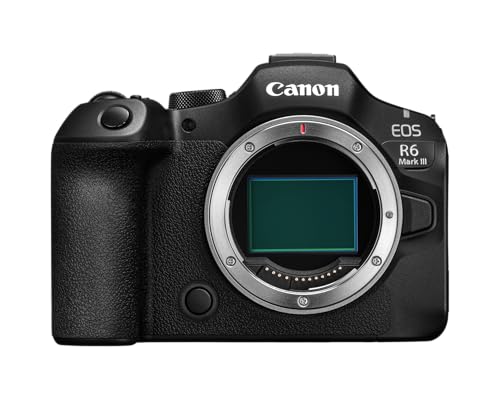 Best for: Canon shooters who want 7K raw and open gate in one body
The EOS R6 III records up to 7K 60p, with internal Canon RAW and ProRes RAW over a full-size HDMI port. 4K reaches 120p, 4K 60p uses the full sensor width, and open gate gives room to cut horizontal and vertical versions from one take. C-Log2 and C-Log3 in 10-bit 4:2:2 cover grading. Measured readout is 14.3 ms at 4K full width. Clips can run up to 360 minutes, and 8.5 stops of in-body stabilization help with handheld work. Its 32.5MP sensor also leaves more room to crop stills than the 24.5MP Z6 III.
It has no fan, so very long takes in heat depend on passive cooling. Its measured readout is slower than the Z6 III's 9.4 ms or the X-H2S's 9.7 ms, so fast pans show more skew. Battery life is rated at 510 shots. Shooters who want the least rolling shutter should look at the Nikon Z6 III, and those who want a fan for long takes should look at the Lumix S1 II.
- 32.5MP full-frame sensor
- 40 fps burst
- 7K video, 4K 120p
- 8.5-stop stabilization
- 4
 Nikon Z6 III9.3Best for: Nikon shooters who want internal 6K raw and low rolling shutter
The Z6 III's partially stacked 24.5MP sensor has a measured readout of 9.4 ms at 6K, just ahead of the X-H2S's 9.7 ms. That keeps fast pans and moving subjects clean. It records 6K 60p internally in N-RAW or ProRes RAW, plus 4K 120p, and 4K 60p uses the full sensor width. 10-bit 4:2:2 with N-Log covers graded work, and autofocus is rated down to -10 EV for dim venues. CFexpress Type B and SD slots, a full-size HDMI port and eight stops of stabilization round it out.
There is no fan, and clips are capped at 125 minutes, which matters for long ceremonies or stage recordings. It weighs 760 g, battery life is rated at 390 shots, and there is no open gate mode. Shooters who need open gate or a 360-minute clip limit should consider the Canon EOS R6 III. Those who need a fan for long takes should look at the Lumix S1 II.
- 24.5MP full-frame sensor
- 60 fps burst
- 6K video, 4K 120p
- 8-stop stabilization
- 5
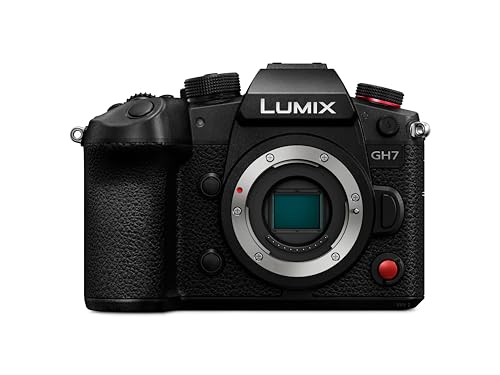 BEST VALUEBest for: Video specialists who want internal raw and smaller Micro Four Thirds lenses
The GH7 brings much of the S1 II's video toolkit to Micro Four Thirds. It records 5.8K 30p and 4K 120p, with no crop at 4K 60p, in 10-bit 4:2:2 V-Log, plus open gate and internal ProRes RAW. A built-in fan, a full-size HDMI port, and CFexpress Type B plus SD slots suit long recording days. Measured readout is 13.2 ms at C4K. The smaller sensor means smaller lenses and deeper depth of field at the same framing, which helps a solo operator keep subjects in focus.
The trade-off is low light. Native ISO tops out at 25,600, and autofocus is rated down to -4 EV, compared with -10 EV on the Nikon Z6 III. At 805 g the body is not light either. For shallow depth of field and cleaner footage in dark venues, the full-frame Lumix S1 II or Z6 III is a better fit. Without the need for a fan or internal raw, the G9 II offers similar 4K modes in a stills-oriented body.
- 25.2MP Micro Four Thirds sensor
- 75 fps burst
- 5K video, 4K 120p
- 7.5-stop stabilization
- 6
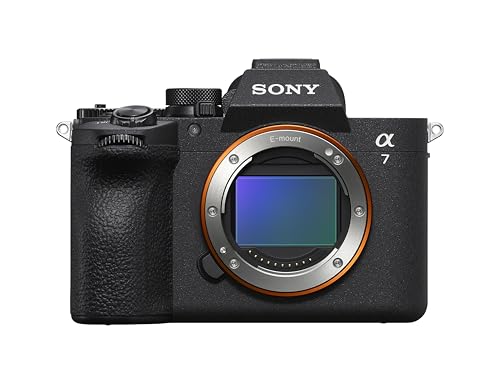 Sony A7 V9.2Best for: Sony shooters who want a 33MP hybrid with long battery life
The A7 V leans toward stills but covers core video needs. Its 33MP partially stacked sensor records 4K up to 120p, with 4K 60p at full width and a measured readout of 14.5 ms. Footage is 10-bit 4:2:2 S-Log3. Battery life is rated at 750 shots, well above the Lumix S1 II's 360, which helps on long shoot days. It has a full-size HDMI port, a multi-angle screen, 7.5 stops of in-body stabilization, and one CFexpress Type A/SD slot plus one SD slot. Subject detection covers people, animals, birds, insects, vehicles, aircraft and trains.
Video tops out at 4K, with no raw video and no open gate, and there is no fan. Its measured readout is slower than the Z6 III's or the X-H2S's. Shooters who want internal raw above 4K should look at the Canon EOS R6 III or Nikon Z6 III. Those who need 8K or more stills resolution in E-mount should consider the A7R VI.
- 33MP full-frame sensor
- 30 fps burst
- 4K video, 4K 120p
- 7.5-stop stabilization
- 7Nikon Z99.3
- 45.7MP full-frame sensor
- 30 fps burst
- 8K video, 4K 120p
- 6-stop stabilization
- 8
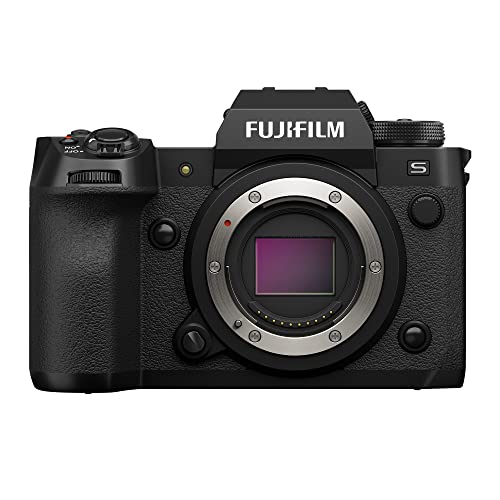 Best for: Fujifilm users who want low rolling shutter in an APS-C body
The X-H2S has a stacked 26.16MP APS-C sensor with a measured readout of 9.7 ms at 4K full width. That is quicker than the Lumix S1 II's 12.7 ms and just behind the Z6 III's 9.4 ms. It records 6.2K 30p and 4K 120p, with no crop at 4K 60p, in 10-bit 4:2:2 with F-Log or F-Log2. Open gate is supported, and ProRes RAW or Blackmagic RAW can go out over the full-size HDMI port. CFexpress Type B and SD slots handle high bitrates, and the 5.76M-dot, 0.8x viewfinder is large and sharp.
It is an older design, from 2022, and has no fan or internal raw. The APS-C sensor gives deeper depth of field and less low-light headroom than full frame, and native ISO tops out at 12,800. Those who want internal raw with full frame should consider the Nikon Z6 III. Those who want a fan and internal raw with compact lenses should look at the Lumix GH7.
- 26.16MP APS-C sensor
- 40 fps burst
- 6K video, 4K 120p
- 7-stop stabilization