Best video cameras under $1,500
UPDATED OCTOBER 2026For video we weigh 4K frame rates, 10-bit colour and log for grading, whether 4K 60p crops in, rolling shutter, and whether the camera can keep recording without overheating.
How we ranked them: 4K frame rates, 10-bit colour and log, no crop at 4K 60p, fast readout, cooling, from manufacturer specs and lab measurements, plus our overall score. How CameraFits makes money
Who this is for
This guide is for vloggers, YouTubers, small-business content makers and student filmmakers who want gradeable 10-bit footage and interchangeable lenses without paying for a professional body. Most are small enough to carry every day, and all of them double as stills cameras.
What matters most
Frame rates set how smooth motion looks and how much slow motion is available. 4K 60p plays back at 40% speed on a 24p timeline. The Sony A6700 goes further, to 4K 120p.
10-bit color and a log profile let footage be graded without banding. Every camera here records 10-bit with log. The Sony, Fujifilm and Panasonic bodies record 4:2:2, which keeps more color detail than the 4:2:0 of the Nikons.
A crop at 4K 60p makes a wide lens noticeably tighter, which is a problem when filming yourself at arm's length. The A6700 shoots 4K 60p at full width. The ZV-E10 II crops 1.1x, the X-M5 and X-T30 III 1.18x, and the Z5 IIc, S9 and Z50 II 1.5x.
Readout speed controls rolling shutter, the skew in fast pans. Measured readout is 15.9 ms on the A6700 and 22 ms on the S9.
Cooling and stabilization round it out. None of these cameras has a fan. The A6700, Z5 IIc, X-S20 and S9 have in-body stabilization; the X-M5, Z50 II, ZV-E10 II and X-T30 III rely on stabilized lenses or a gimbal.
How these picks differ
Two are full frame: the Nikon Z5 IIc and Panasonic Lumix S9. They give shallower depth of field and more low-light headroom, but both crop 1.5x at 4K 60p. The A6700, ZV-E10 II, Z50 II and the three Fujifilm bodies are APS-C. The three Fujifilm bodies share a 26.1MP sensor, 6.2K recording and open gate, and differ mainly in stabilization, size and controls. The Sony A6700 and ZV-E10 II share the E-mount: the A6700 adds stabilization, weather sealing and 4K 120p, while the ZV-E10 II is lighter. The Nikon Z50 II is the entry point to Nikon's Z-mount.
Buying advice
Budget for a fast SD card. The X-M5 and X-T30 III take UHS-I cards, and the other cameras in this guide take UHS-II. Add an external microphone, since built-in mics pick up handling noise, and check for a headphone jack: the S9 and X-T30 III have a mic input only. Buy at least one spare battery, especially for the Z50 II, rated at 230 shots. On bodies without stabilization, pick a stabilized lens. Skip 4K 120p and open gate unless slow motion or vertical crops are part of the plan.
The 8 picks
- 1
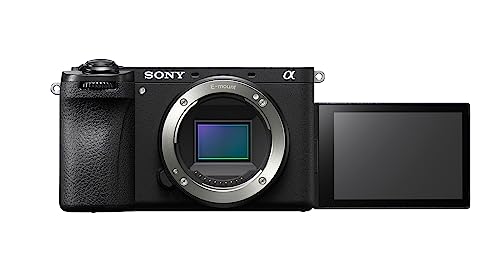 BEST OVERALLSony A67007.3Best for: Sony users who want 4K 120p and uncropped 4K 60p
The A6700 records 4K 120p, which the X-S20 and Z5 IIc do not, and it shoots 4K 60p at full width instead of cropping in. Footage is 10-bit 4:2:2 S-Log3, and its measured readout of 15.9 ms is shorter than the X-S20's 20.3 ms, so pans skew less. Five stops of in-body stabilization, weather sealing, mic and headphone jacks, and a battery rated at 570 shots make it a practical all-day body. Subject detection covers people, animals, birds, insects, vehicles, aircraft and trains.
The sensor is APS-C, so low-light headroom and background blur trail the full-frame Z5 IIc and S9. Five stops of stabilization is less than the X-S20's seven. There is no raw video, no open gate, one SD slot and a micro HDMI port. Shooters who want full frame should look at the Nikon Z5 IIc. Those who want open gate for vertical crops should consider the Fujifilm X-S20.
- 26MP APS-C sensor
- 11 fps burst
- 4K video, 4K 120p
- 5-stop stabilization
- 2
- 20.4MP Micro Four Thirds sensor
- 30 fps burst
- 5.6K video, 4K 120p
- 508 g
- 3Nikon Z5 IIc8.6Best for: Video shooters who want full frame and internal N-RAW
The Z5 IIc pairs a 24.5MP full-frame sensor with internal N-RAW recording, which the Lumix S9 lacks. It records 4K 60p in 10-bit with N-Log, autofocus is rated down to -10 EV for dim rooms, and 7.5 stops of in-body stabilization help with handheld shots. Weather sealing, a fully articulating screen, and mic and headphone jacks round it out. The full-frame sensor also gives shallower depth of field than APS-C bodies such as the Sony A6700.
4K 60p crops 1.5x, which narrows wide lenses. Color is 4:2:0 rather than 4:2:2, clips stop at 125 minutes, and there is one SD slot. No lab readout figure is available yet. At 620 g it is heavier than the Lumix S9. Shooters who need uncropped 4K 60p should pick the Sony A6700. Those who want full frame in a lighter body should look at the Lumix S9.
- 24.5MP full-frame sensor
- 30 fps burst
- 4K video, 4K 60p
- 7.5-stop stabilization
- 4
 Best for: Fujifilm users who want stabilization, open gate and long battery life
The X-S20 pairs seven stops of in-body stabilization with Fujifilm's full video toolkit. It records up to 6.2K 30p and 4K 60p in 10-bit 4:2:2 with F-Log or F-Log2, and open gate leaves room to cut horizontal and vertical versions from one take. ProRes RAW or Blackmagic RAW can go out over HDMI. Battery life is rated at 750 shots, longer than the A6700's 570, and it has mic and headphone jacks, a fully articulating screen, and autofocus rated down to -7 EV.
Measured readout is 20.3 ms, so fast pans skew more than on the A6700. There is no weather sealing, one SD slot and a micro HDMI port, and at 491 g it is heavier than the X-M5. The APS-C sensor trails full-frame bodies such as the Z5 IIc in low light. Those who want 4K 120p and weather sealing should consider the Sony A6700. Fujifilm users who want a smaller body and can work without stabilization can look at the X-M5.
- 26.1MP APS-C sensor
- 30 fps burst
- 6K video, 4K 60p
- 7-stop stabilization
- 5
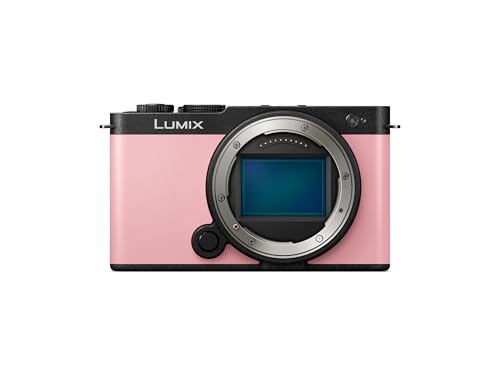 Best for: Creators who want full-frame video in a small, light body
The S9 puts a 24.2MP full-frame sensor into a 486 g body, lighter than the full-frame Nikon Z5 IIc. It records 6K 30p and 4K 60p in 10-bit 4:2:2 V-Log, supports open gate for cropping vertical and horizontal versions, and has 6.5 stops of in-body stabilization. Battery life is rated at 470 shots. The full-frame sensor gives shallower depth of field and more low-light headroom than APS-C bodies such as the X-S20, and it uses the L-Mount shared with Panasonic's larger full-frame cameras.
The shutter is electronic only, 4K 60p crops 1.5x, and its measured readout of 22 ms is slower than the A6700's 15.9 ms. It has a mic jack but no headphone jack, no weather sealing, no raw video, one SD slot and a micro HDMI port. Shooters who want headphone monitoring and internal raw in full frame should look at the Nikon Z5 IIc.
- 24.2MP full-frame sensor
- 30 fps burst
- 6K video, 4K 60p
- 6.5-stop stabilization
- 6BEST VALUE
- 24.2MP APS-C sensor
- 15 fps burst
- 4K video, 4K 60p
- 370 g
- 7
 Best for: Vloggers who want a very small body with 10-bit F-Log
At 355 g, the X-M5 is lighter than the ZV-E10 II, which makes it easy to hold at arm's length or mount on a small gimbal. It records 6.2K 30p and 4K 60p in 10-bit 4:2:2 with F-Log and F-Log2, supports open gate, and can send 12-bit raw over HDMI at up to 6.2K. Its measured readout of 20.3 ms matches the X-S20. It also has mic and headphone jacks and subject detection for people, animals, birds, vehicles, aircraft and trains.
There is no in-body stabilization, 4K 60p crops 1.18x, and the mechanical shutter tops out at 1/4000 s. It uses one UHS-I card slot, battery life is rated at 330 shots, and there is no weather sealing. Fujifilm users who want stabilization and a longer battery rating should choose the X-S20. Those who want full frame in a small body should consider the Lumix S9.
- 26.1MP APS-C sensor
- 30 fps burst
- 6K video, 4K 60p
- 355 g
- 8
 Nikon Z50 II6.2Best for: Nikon beginners who want 10-bit N-Log in an APS-C body
The Z50 II brings 10-bit N-Log and 4K 60p to a compact Z-mount body, and the mount is shared with Nikon's full-frame cameras, so lenses can carry over later. Autofocus is rated down to -9 EV and covers people, animals, birds, vehicles, aircraft and trains. Its measured readout is 21 ms. It has a fully articulating screen, mic and headphone jacks, and a 2.36M-dot viewfinder with 1.02x magnification.
The trade-offs are clear. Its 20.9MP sensor has less resolution than the 26MP Sony A6700, there is no in-body stabilization, and 4K 60p crops 1.5x. Color is 4:2:0, there is no raw video, clips stop at 125 minutes, and battery life is rated at 230 shots, well below the ZV-E10 II's 610. Shooters who want stabilization and uncropped 4K 60p should look at the Sony A6700. Those who want to stay with Nikon and move to full frame should consider the Z5 IIc.
- 20.9MP APS-C sensor
- 30 fps burst
- 4K video, 4K 60p
- 550 g