Best cameras for street photography
UPDATED OCTOBER 2026Street photography is about being small, quick and unnoticed. These are light bodies with dependable autofocus and quiet shutters.
How we ranked them: small and light, quick autofocus, a quiet electronic shutter, from manufacturer specs and lab measurements, plus our overall score. How CameraFits makes money
Who this is for
Photographers who walk cities and shoot candid moments, and anyone who wants a camera small enough to carry every day. Street work rewards a camera that is always at hand and does not draw attention.
What matters most
Size and weight come first. A camera that stays home takes no pictures. The Ricoh GR IV weighs 262g and the Fujifilm X100VI 521g, and a small lens matters as much as a small body.
Quick autofocus matters because street moments last a second. The Fujifilm, Sony and Panasonic cameras detect people, animals and vehicles. The Ricoh and OM System detect people only, which still covers most street subjects.
A quiet electronic shutter makes no sound, so subjects are less likely to notice the shot. The catch is readout speed. An electronic shutter scans the sensor line by line, and a slow scan can bend fast-moving subjects. Measured readout is 10 ms on the OM-5 II, which is quick, and 27.4 ms on the Sony A7C II, which is slow enough to skew cyclists and passing cars.
How these picks differ
The Ricoh GR IV and the Fujifilm X100VI are fixed-lens compacts. They are simple and discreet, but the focal length cannot change. The others take interchangeable lenses.
Sensor size varies widely. The OM-5 II uses Micro Four Thirds, the Fujifilm and Ricoh cameras use APS-C, and the Sony A7C II and Panasonic Lumix S9 are full frame, which helps at night. Fujifilm's 40.2MP bodies allow tight crops, while the X-S20 trades resolution for much longer battery life. The GR IV and S9 have no built-in viewfinder, so framing happens on the rear screen. The OM-5 II and A7C II are weather sealed; the Fujifilm, Ricoh and Panasonic bodies are not.
Buying advice
Pair an interchangeable-lens body with a small prime around 23mm to 35mm on APS-C, or 35mm on full frame; it keeps the camera light and teaches quick framing. With a fixed-lens camera, choose the focal length carefully, because it cannot be changed later. Carry a spare battery, since several of these bodies are rated near 300 shots. A wrist strap and a fast SD card are worth more than extra lenses. Skip long zooms: they add weight and attention without helping at street distances.
The 8 picks
- 1
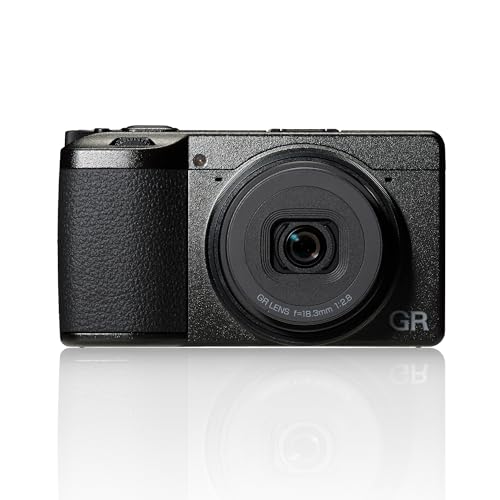 BEST OVERALLRicoh GR IV4.6Best for: Photographers who want an APS-C camera that fits a pocket
The GR IV weighs 262g, about half the X100VI, so it can go everywhere. It still uses a 25.74MP APS-C BSI sensor and 6-stop in-body stabilization, which helps keep slow shutter speeds sharp at dusk. Native ISO reaches 204,800 for very dark streets. Around 53GB of internal storage backs up the microSD slot, so a forgotten card does not end the day. Its autofocus detects people, the main subject in street work.
It is a specialist tool. The fixed lens cannot be swapped, there is no viewfinder, and the rear screen does not tilt. Battery life is rated at 250 shots, so carry spares, and video is limited to 1080p. Autofocus offers people detection only, and there is no weather sealing. Photographers who want a viewfinder, 40MP and better video in a fixed-lens camera should choose the X100VI.
- 25.74MP APS-C sensor
- Full HD video
- 6-stop stabilization
- 262 g
- 2
 Best for: Photographers who want a fixed-lens camera with a viewfinder
The X100VI combines a fixed lens with a 40.2MP APS-C BSI sensor, so there is plenty of room to crop a frame shot from a distance. It adds 6-stop in-body stabilization, a 3.69M-dot viewfinder, and a tilting screen for waist-level shots that attract less attention. Its electronic shutter reaches 1/180,000 s and makes no sound, and its measured readout of 16.5 ms keeps distortion modest. Autofocus detects people, animals and vehicles.
At 521g it is about twice the weight of the GR IV, and the fixed focal length cannot change. There is no weather sealing, battery life is rated at 310 shots, and the card slot is UHS-I. Raw video is not available. Photographers who want a much smaller, lighter camera should look at the GR IV, and those who want the same 40MP sensor with interchangeable lenses can choose the X-E5 or X-T50.
- 40.2MP APS-C sensor
- 20 fps burst
- 6K video, 4K 60p
- 6-stop stabilization
- 3

- 24.2MP full-frame sensor
- 40 fps burst
- 4K video, 4K 60p
- 7.5-stop stabilization
- 4
 Best for: Fujifilm fans who want 40MP and stabilization in a small body
The X-T50 puts a 40.2MP APS-C BSI sensor and 7-stop stabilization in a 438g body. That makes it lighter than the 491g X-S20, and the high resolution allows tight crops from candid frames. Its silent electronic shutter has a measured readout of 15.3 ms, quick enough to limit bending on most street subjects. Autofocus detects people, animals and vehicles, and the tilting screen helps with discreet waist-level shooting.
Battery life is rated at 305 shots, so a spare is worth carrying. There is no weather sealing, and the 2.36M-dot, 0.62x viewfinder is small. Video is capable, but there is only a mic jack. The X-E5 offers the same sensor, stabilization and readout with an autofocus rating to −7 EV, while the X-S20 trades resolution for much longer battery life.
- 40.2MP APS-C sensor
- 20 fps burst
- 6K video, 4K 60p
- 7-stop stabilization
- 5
 Best for: Fujifilm shooters who want 40MP and dependable low-light autofocus
The X-E5 shares its core with the X-T50: a 40.2MP APS-C BSI sensor, 7-stop stabilization and a silent electronic shutter with a measured readout of 15.3 ms. It weighs 445g. Autofocus detects people, animals and vehicles and is rated to −7 EV, so it keeps working on dim side streets at night. The tilting screen allows waist-level framing, and the high resolution leaves room to crop.
The 2.36M-dot, 0.62x viewfinder is small, and battery life is rated at 310 shots. There is no weather sealing, and video has a mic jack but no headphone jack. Since its key specs match the X-T50, the choice comes down to handling and price. Photographers who want a fixed lens for simplicity can look at the X100VI, and those who need longer battery life should consider the X-S20.
- 40.2MP APS-C sensor
- 20 fps burst
- 6K video, 4K 60p
- 7-stop stabilization
- 6
 Best for: Street shooters who want long battery life and an articulating screen
The X-S20 is rated at 750 shots per charge, more than twice the X-T50's 305, which suits long days on foot. It pairs a 26.1MP APS-C BSI sensor with 7-stop stabilization and autofocus rated to −7 EV that detects people, animals and vehicles. The fully articulating screen helps with low and high angles, and mic and headphone jacks make it a capable video camera for street clips. It weighs 491g.
Its measured readout of 20.3 ms is slower than the X-T50 and X-E5, so the silent shutter is more likely to bend fast subjects. The 26MP sensor gives less room to crop than the 40MP Fujifilm bodies, and the 2.36M-dot viewfinder is small. There is no weather sealing. Photographers who want more resolution in a lighter body should choose the X-T50.
- 26.1MP APS-C sensor
- 30 fps burst
- 6K video, 4K 60p
- 7-stop stabilization
- 7
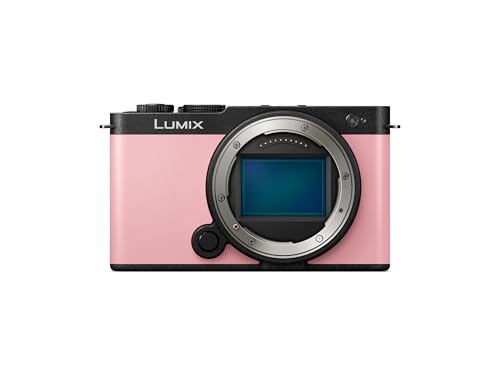 Best for: Photographers who want full frame without a viewfinder
The Lumix S9 puts a 24.2MP full-frame sensor in a 486g body, so it gathers more light than the APS-C X-T50 for night street work. Its shutter is electronic only, which means every frame is silent. It adds 6.5-stop stabilization, autofocus rated to −6 EV that detects people, animals and vehicles, and battery life rated at 470 shots. Video is strong too, with 6K open gate recording and V-Log.
There is no viewfinder, so all framing happens on the rear screen, which is harder in bright sun. Because there is no mechanical shutter, its measured readout of 22 ms can bend fast-moving subjects with no fallback. It is not weather sealed and has only a mic jack for audio. Photographers who want full frame with a viewfinder and weather sealing should choose the A7C II.
- 24.2MP full-frame sensor
- 30 fps burst
- 6K video, 4K 60p
- 6.5-stop stabilization
- 8Sony A7C R7.9
- 61MP full-frame sensor
- 8 fps burst
- 4K video, 4K 60p
- 7-stop stabilization