Best cameras for wildlife
UPDATED OCTOBER 2026Wildlife rewards fast bursts, autofocus that recognises birds and animals, and enough resolution to crop in. Weather sealing helps on long days outside.
How we ranked them: burst speed, bird and animal tracking, resolution to crop, weather sealing, from manufacturer specs and lab measurements, plus our overall score. How CameraFits makes money
Who this is for
Photographers who shoot birds, mammals and other animals that move fast, sit far away, or both. That covers backyard birders, safari travelers and people who spend long mornings in a hide. Each camera covered is a full-frame mirrorless body with weather sealing and subject detection that recognizes animals and birds.
What matters most
Burst speed sets how many chances you get when a bird takes off. Each body covered shoots at 30 fps or faster, which is enough to catch a wingbeat at its peak. Tracking matters as much as raw speed: the camera has to find the eye and stay on it as the animal moves. The Sony A7R VI, A1 II and A7 V also add insects to their detection lists. Resolution decides how far you can crop. A 45MP or larger file lets you trim a distant subject and still print it large, which can delay buying a longer lens. Readout speed affects distortion when shooting silently with the electronic shutter; a faster measured readout keeps wings and branches straight. Weather sealing matters because wildlife work means dawn dew, rain and dust.
How these picks differ
The group falls into three tiers. The high-resolution stacked bodies are the Sony A7R VI (66.8MP), Sony A1 II (50.1MP), Canon EOS R5 II (45MP), and the Nikon Z8 and Z9 (both 45.7MP). They combine large files with fast bursts. The Z9 is the big body at 1,340 g, with more than twice the rated battery life of the Z8, which puts the same sensor in a 910 g body. The second tier, the Canon EOS R6 III (32.5MP) and Sony A7 V (33MP), trades some cropping room for lower weight. The Nikon Z6 III has less resolution at 24.5MP, but its measured readout of 9.4 ms is faster than the Z8's 14.5 ms, and it reaches 60 fps. Each of them shoots capable video, so that is rarely the deciding factor.
Buying advice
Pick the system first, then the body. Long lenses often cost more than the camera and outlast several bodies, so check which long zooms and supertelephotos each mount offers before you commit. Budget for at least two fast memory cards; high-speed bursts fill the buffer quickly, and CFexpress cards clear it faster than SD. Spare batteries are essential on the Z8, which is rated for 340 shots. Skip advanced video features if you only shoot stills, and put the savings toward glass. A beanbag or gimbal head will do more for sharpness at long focal lengths than a few extra megapixels.
The 8 picks
- 1
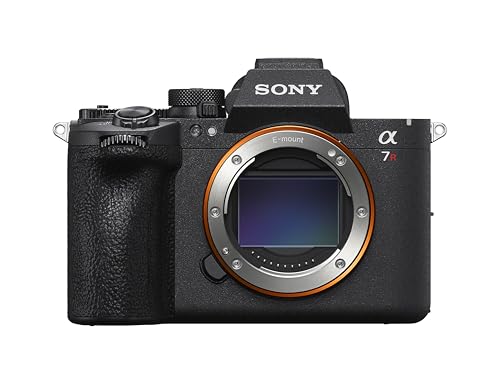 BEST OVERALLSony A7R VI9.8Best for: Sony shooters who crop hard and want very high resolution
The A7R VI has a 66.8MP stacked sensor, more resolution than the 50.1MP Sony A1 II, so a small bird in the corner of the frame can still become a full-size print. It pairs that with bursts up to 30 fps, subject detection that covers animals, birds and insects, and a measured readout of 13.5 ms for silent shooting. The 9.44M-dot, 0.9x viewfinder helps when judging focus on feathers, and 8.5 stops of stabilization steady handheld telephoto work. Battery life is rated at 710 shots, strong for a high-resolution body.
The trade-offs are file size and low-light headroom. Native ISO tops out at 32,000, and 66.8MP files fill cards and drives quickly. Its electronic shutter stops at 1/8000 s. Sony users who want a 1/32000 s electronic shutter and smaller files should look at the Sony A1 II, which still offers 50.1MP for cropping.
- 66.8MP full-frame sensor
- 30 fps burst
- 8K video, 4K 120p
- 8.5-stop stabilization
- 2
 Sony A1 II9.7Best for: Sony wildlife shooters who want 50MP and a top-grade viewfinder
The A1 II combines a 50.1MP stacked sensor with bursts up to 30 fps, which gives both cropping room and speed for birds in flight. Its subject detection covers animals, birds and insects. The electronic shutter reaches 1/32000 s, useful for freezing wings in bright light with fast lenses. It shares the 9.44M-dot, 0.9x viewfinder of the A7R VI, has 8.5 stops of stabilization, and takes two CFexpress A or SD cards, so every burst can be backed up as it is shot.
Its measured readout of 16.5 ms is slower than the A7R VI's 13.5 ms, and its autofocus is rated only to -4 EV, less than the Canon EOS R5 II's -6.5 EV, which matters in deep shade at dawn. Battery life is rated at 520 shots. Sony users who value resolution above all should pick the Sony A7R VI. Those who can work with 33MP should look at the Sony A7 V, rated for 750 shots per charge.
- 50.1MP full-frame sensor
- 30 fps burst
- 8K video, 4K 120p
- 8.5-stop stabilization
- 3
 Best for: Canon shooters who want 45MP and speed in one body
The EOS R5 II gives Canon users a 45MP stacked sensor and bursts up to 30 fps, enough resolution to crop a distant subject and enough speed for take-offs. Autofocus detects animals and birds and is rated down to -6.5 EV, so it keeps working in dim forest light. Stabilization is rated at 8.5 stops, a real help with long lenses handheld. It records to one CFexpress B and one SD card, and the 5.76M-dot viewfinder is sharp enough to check eye focus. At 746 g it is much lighter than the Nikon Z8.
Its measured readout of 17.3 ms is slower than the Nikon Z8's 14.5 ms, so very fast wings can show slight skew with the electronic shutter. Battery life is rated at 540 shots. Canon shooters who value speed over pixels should consider the Canon EOS R6 III, which reaches 40 fps with a faster 14.3 ms measured readout.
- 45MP full-frame sensor
- 30 fps burst
- 8K video, 4K 120p
- 8.5-stop stabilization
- 4Nikon Z99.3Best for: Nikon shooters who need long battery life and dual CFexpress
The Z9 shares the Z8's 45.7MP stacked sensor, 30 fps bursts and electronic-only shutter, with a measured readout of 14.5 ms. Autofocus detects animals and birds and is rated to -9 EV. What sets it apart is endurance. Battery life is rated at 740 shots, more than twice the Z8's 340, and it records to two CFexpress B cards for fast, matched backup. That suits long sessions in a hide or on a safari vehicle, where changing batteries is awkward and missing a moment is costly.
The price of that endurance is size. At 1,340 g it is 430 g heavier than the Z8, and it adds real weight to a long-lens kit carried on foot. Stabilization is rated at 6 stops, and it is an older design than the Z8. Hikers and travelers who want the same sensor in a lighter body should pick the Nikon Z8.
- 45.7MP full-frame sensor
- 30 fps burst
- 8K video, 4K 120p
- 6-stop stabilization
- 5
 Nikon Z89.1Best for: Nikon shooters who want Z9 performance in a smaller body
The Z8 uses the same 45.7MP stacked sensor as the Nikon Z9 in a body that weighs 910 g instead of 1,340 g. It shoots bursts up to 30 fps and uses an electronic shutter only, with a measured readout of 14.5 ms, so there is no shutter sound to spook nervous animals. Autofocus detects animals and birds and is rated down to -9 EV, very good for dim light. Weather sealing and a CFexpress B plus SD card pair suit long days in the field.
Battery life is the weak point at a rated 340 shots, so plan on carrying spares. Stabilization is rated at 6 stops, less than the 8.5 stops of the Canon EOS R5 II and Sony A7R VI. Nikon users who want longer battery life and two CFexpress slots should choose the Nikon Z9. Those who want a lighter, faster-reading body should look at the Nikon Z6 III.
- 45.7MP full-frame sensor
- 30 fps burst
- 8K video, 4K 120p
- 6-stop stabilization
- 6
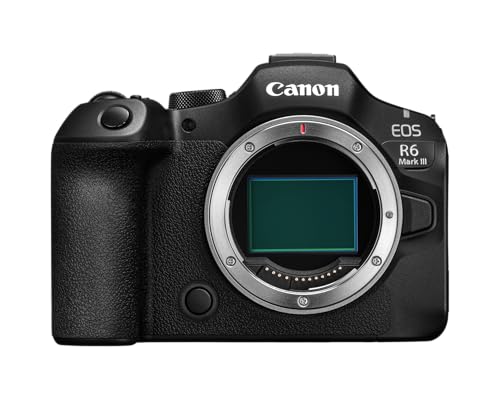 BEST VALUEBest for: Canon shooters who want 40 fps bursts in a lighter body
The EOS R6 III reaches 40 fps, a faster burst than the 30 fps Canon EOS R5 II, and its 32.5MP sensor leaves some room to crop. Autofocus detects animals and birds and is rated down to -6.5 EV. Its measured readout of 14.3 ms is quicker than the EOS R5 II's 17.3 ms. Stabilization is rated at 8.5 stops, it is weather sealed, and it records to a CFexpress B and an SD card. At 699 g it is lighter than the R5 II, which counts on long hikes with a big lens.
It does not use a stacked sensor, and 32.5MP gives less cropping room than the 45MP R5 II. The 3.69M-dot viewfinder is also a step down from the R5 II's 5.76M-dot finder. Canon users who often crop small birds should choose the Canon EOS R5 II. Sony users after a similar balance should look at the Sony A7 V.
- 32.5MP full-frame sensor
- 40 fps burst
- 7K video, 4K 120p
- 8.5-stop stabilization
- 7
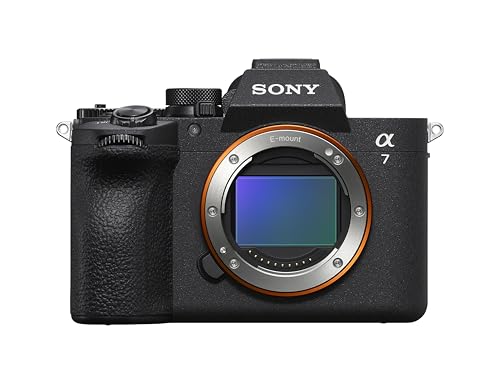 Sony A7 V9.2Best for: Sony shooters who want speed, battery life and moderate resolution
The A7 V pairs a 33MP partially stacked sensor with bursts up to 30 fps and a measured readout of 14.5 ms. Its subject detection covers animals, birds and insects, the same list as Sony's higher-end bodies. Battery life is rated at 750 shots, more than the A7R VI's 710, and at 695 g it is lighter than the Canon EOS R6 III. Weather sealing and stabilization rated at 7.5 stops round out a body that is easy to carry all day with a long zoom.
Its autofocus is rated to -4 EV, less sensitive in very low light than the Canon EOS R6 III's -6.5 EV. The 3.69M-dot viewfinder is a step below the 9.44M-dot finders of the A7R VI and A1 II, and 33MP limits how hard you can crop. Sony users who crop heavily should choose the Sony A7R VI. Canon users looking for a similar balance should consider the Canon EOS R6 III.
- 33MP full-frame sensor
- 30 fps burst
- 4K video, 4K 120p
- 7.5-stop stabilization
- 8
 Canon EOS R19.6
- 24.2MP full-frame sensor
- 40 fps burst
- 6K video, 4K 120p
- 8.5-stop stabilization
$6,799See price at Amazon