Best cameras under $3,000
UPDATED OCTOBER 2026The strongest bodies you can buy for $3,000 or less, at today's prices. Body only; add a lens with Build a kit on each camera's page.
How we ranked them: overall image quality, speed, video and stabilization, price, from manufacturer specs and lab measurements, plus our overall score. How CameraFits makes money
Who this is for
This guide is for serious enthusiasts and working photographers and filmmakers: wedding and event shooters, sports and wildlife photographers, and hybrid creators who need one body for both stills and video. At this budget, faster sensors, CFexpress card slots and internal raw video become common.
What matters most
Readout speed is the biggest step up at this level. Stacked and partially stacked sensors read out quickly, so the silent electronic shutter can be used for action without moving subjects bending, and video shows less rolling shutter. Measured readout is 9.4 ms on the Nikon Z6 III and 22 ms on the Nikon Zf.
Every camera here has between 24MP and 33MP. The extra pixels on the Sony A7 V and Canon EOS R6 III give more room to crop, while the 24MP bodies keep files smaller.
Card slots matter for paid work. Two slots let a camera write a backup copy of every frame, and CFexpress cards write faster than SD, which helps with long bursts and high-bitrate video.
Video separates these cameras more than stills do: whether 4K 60p crops in, whether 4K 120p is available, and whether raw records internally.
Every camera here has 7 to 8.5 stops of stabilization, which steadies handheld shots in dim light.
How these picks differ
The Fujifilm X-H2S is APS-C and the Panasonic G9 II is Micro Four Thirds; both give extra reach for wildlife and sports compared with the full-frame bodies. Canon's options are the R6 III, the older R6 II and the light R8 II. Nikon has the speed-focused Z6 III and the stills-focused Zf. The Lumix S1 II is video-led, with a fan, and the A7 V is a 33MP all-rounder with a long battery rating. The Z6 III, S1 II, A7 V and X-H2S use stacked or partially stacked sensors.
Buying advice
These prices are for the body alone, so budget for at least one good lens, plus fast cards: CFexpress Type B for the Z6 III, R6 III, S1 II and X-H2S, and CFexpress Type A for the A7 V. Buy one or two spare batteries. For weddings, choose a body with two slots, which rules out the R8 II. A body such as the R6 II or Zf paired with a better lens often delivers more than a newer body with a basic zoom. Skip internal raw and open gate unless the editing workflow will use them.
The 8 picks
- 1
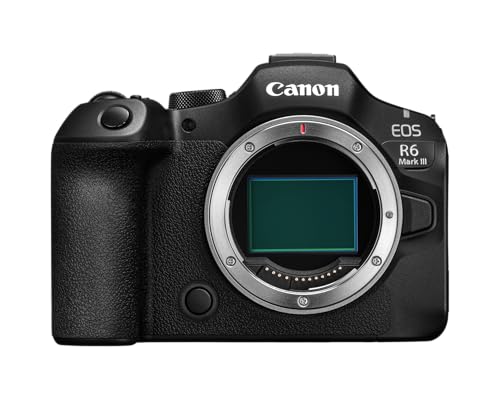 BEST OVERALLBest for: Canon shooters who want 32.5MP stills and 7K raw video
The EOS R6 III balances resolution, speed and video. Its 32.5MP full-frame sensor gives room to crop, the electronic shutter reaches 40fps, and 8.5 stops of in-body stabilization is more than the Z6 III's eight. Autofocus is rated down to -6.5 EV, and CFexpress Type B plus SD slots handle bursts and backups. Video goes up to 7K 60p with internal Canon RAW, plus 4K 120p, uncropped 4K 60p, open gate, C-Log2 and C-Log3, a full-size HDMI port and clips up to 360 minutes.
Measured readout is 14.3 ms, slower than the Z6 III's 9.4 ms or the X-H2S's 9.7 ms, so fast subjects can skew with the electronic shutter. Battery life is rated at 510 shots, and there is no fan for very long takes. Canon users who do not need the extra resolution or video features should look at the EOS R6 II. Those who prioritize readout speed should consider the Nikon Z6 III.
- 32.5MP full-frame sensor
- 40 fps burst
- 7K video, 4K 120p
- 8.5-stop stabilization
- 2
 BEST VALUENikon Z6 III9.3Best for: Nikon shooters who want fast readout for action and video
The Z6 III has a measured readout of 9.4 ms from a partially stacked 24.5MP sensor, shorter than the R6 III's 14.3 ms. That lets the electronic shutter shoot up to 60fps with little distortion and keeps video skew low. Autofocus is rated down to -10 EV, eight stops of in-body stabilization steady slow shutter speeds, and the 5.76M-dot viewfinder is rated at 4,000 nits for bright conditions. Video reaches internal 6K 60p N-RAW or ProRes RAW and 4K 120p, with uncropped 4K 60p. CFexpress Type B and SD slots cover backup and speed.
Its 24.5MP resolution trails the 33MP A7 V and 32.5MP R6 III, and its dynamic range is a step behind rivals. It weighs 760 g, battery life is rated at 390 shots, clips stop at 125 minutes, and there is no open gate. Shooters who want more resolution and open gate should look at the Canon EOS R6 III. Those who value battery life should consider the Sony A7 V.
- 24.5MP full-frame sensor
- 60 fps burst
- 6K video, 4K 120p
- 8-stop stabilization
- 3
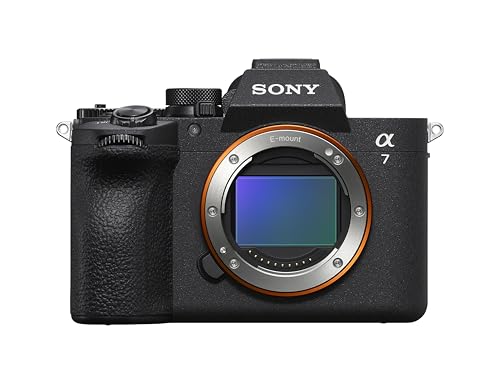 Sony A7 V9.2Best for: Sony shooters who want a 33MP all-rounder with long battery life
The A7 V has a 33MP partially stacked sensor, a little more resolution than the R6 III's 32.5MP, with a measured readout of 14.5 ms. Battery life is rated at 750 shots, well above the Z6 III's 390, which helps on long days. Subject detection covers people, animals, birds, insects, vehicles, aircraft and trains, and 7.5 stops of in-body stabilization, 1/250 s flash sync and a multi-angle screen round out the stills side. Video includes 4K 120p and uncropped 4K 60p in 10-bit 4:2:2 S-Log3, with a full-size HDMI port. It has one CFexpress Type A/SD slot and one SD slot.
Autofocus is rated to -4 EV, compared with -6.5 EV on the R6 III and -10 EV on the Z6 III, and bursts top out at 30fps. Video stops at 4K, with no raw and no open gate. Shooters who want similar resolution with internal raw and open gate should look at the Canon EOS R6 III. Those who need faster bursts should consider the Nikon Z6 III.
- 33MP full-frame sensor
- 30 fps burst
- 4K video, 4K 120p
- 7.5-stop stabilization
- 4
- 32.5MP full-frame sensor
- 40 fps burst
- 7K video, 4K 120p
- 7.5-stop stabilization
- 5
 Best for: Hybrid shooters who put video first but still need speed
The Lumix S1 II pairs a partially stacked 24.1MP full-frame sensor with a measured readout of 12.7 ms at 5.8K, so both video and electronic-shutter stills handle motion well. Bursts reach 70fps, flash sync is 1/250 s, and eight stops of in-body stabilization help handheld. Video is its focus: a built-in fan, internal ProRes RAW, 6K 30p, 4K 120p, uncropped 4K 60p, open gate and 10-bit 4:2:2 V-Log. CFexpress Type B plus SD slots and a 5.76M-dot viewfinder suit professional use.
At 800 g it is heavier than the Z6 III, and battery life is rated at 360 shots. ARRI LogC3 requires a paid key, and autofocus is rated to -6 EV, short of the Z6 III's -10 EV. The 24MP sensor limits cropping. Shooters who want a faster readout and internal raw in a slightly lighter body should look at the Nikon Z6 III. Those who want more resolution and battery life should consider the Sony A7 V.
- 24.1MP full-frame sensor
- 70 fps burst
- 6K video, 4K 120p
- 8-stop stabilization
- 6

- 44.3MP full-frame sensor
- 40 fps burst
- 8K video, 4K 120p
- 8-stop stabilization
- 7
 Best for: Canon event shooters who want dual SD slots and clean high ISO
The EOS R6 II remains a capable event camera. Its 24.2MP full-frame sensor stays clean at ISO 12,800, native ISO reaches 102,400, and autofocus is rated down to -6.5 EV for dark venues. Two SD UHS-II slots give a backup copy of every frame, battery life is rated at 580 shots, and eight stops of in-body stabilization help with slow handheld shutter speeds. The electronic shutter reaches 40fps, and video is uncropped 4K 60p in 10-bit 4:2:2 C-Log3 with clips up to 360 minutes.
Its 24MP resolution limits cropping, there is no CFexpress slot, and the HDMI port is micro. Measured readout is 16.5 ms, so fast subjects can bend with the electronic shutter, and 4K tops out at 60p. Canon users who want 32.5MP, 4K 120p, internal raw and a CFexpress slot should choose the EOS R6 III. Those who want a lighter Canon body should look at the EOS R8 II.
- 24.2MP full-frame sensor
- 40 fps burst
- 4K video, 4K 60p
- 8-stop stabilization
- 8
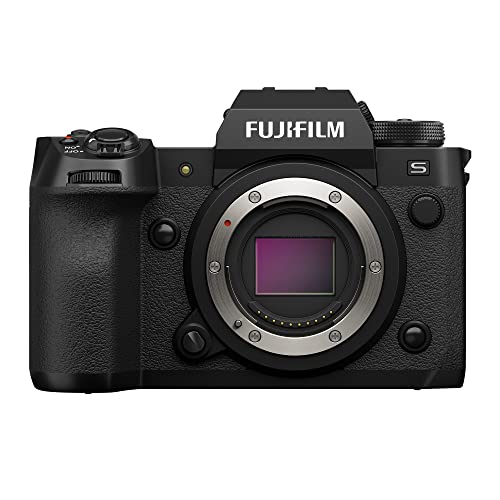 Best for: Fujifilm shooters who want stacked-sensor speed for action
The X-H2S is built for action. Its stacked 26.16MP APS-C sensor has a measured readout of 9.7 ms, close to the Z6 III, so the electronic shutter shoots up to 40fps with little distortion and reaches 1/32000 s. The APS-C format adds reach with telephoto lenses, which helps for sports and wildlife. It has a 5.76M-dot, 0.8x viewfinder, CFexpress Type B plus SD slots, seven stops of in-body stabilization and 1/250 s flash sync. Video includes 4K 120p, 6.2K open gate and F-Log2.
It dates from 2022, an older design than the R6 III. The smaller sensor has less low-light headroom, with native ISO topping out at 12,800, and there is no internal raw video. At 660 g it is heavier than the full-frame R8 II. Shooters who want similar readout speed with a full-frame sensor should look at the Nikon Z6 III. Those who want even more reach and faster bursts should consider the Panasonic G9 II.
- 26.16MP APS-C sensor
- 40 fps burst
- 6K video, 4K 120p
- 7-stop stabilization